Furniture design evolves both with fashion and function changes, and in particular recently there has been a return to smaller office desks mainly due to technological changes. The average PC and monitor is now much smaller than it was a few years ago and this means that desks no longer need to be as large to accommodate them. Gradually more and more of the day to day office tasks are beingdone solely over the computer, and so there is less need for storage and desk space for dealing with paperwork. The current economic climate also means that people are wanting to get the best out of their space, and so furniture design is reflecting this with more smaller desk systems, and also more dual purpose, flexible furniture. With more offices using wifi wireless technology, and the potential for wireless electricity transmission not far away, the offices of tomorrow are likely to change further, moving away from the standard stationary desk per person to a more fluid and flexible office with furniture that can be adapted to suit the task in hand.
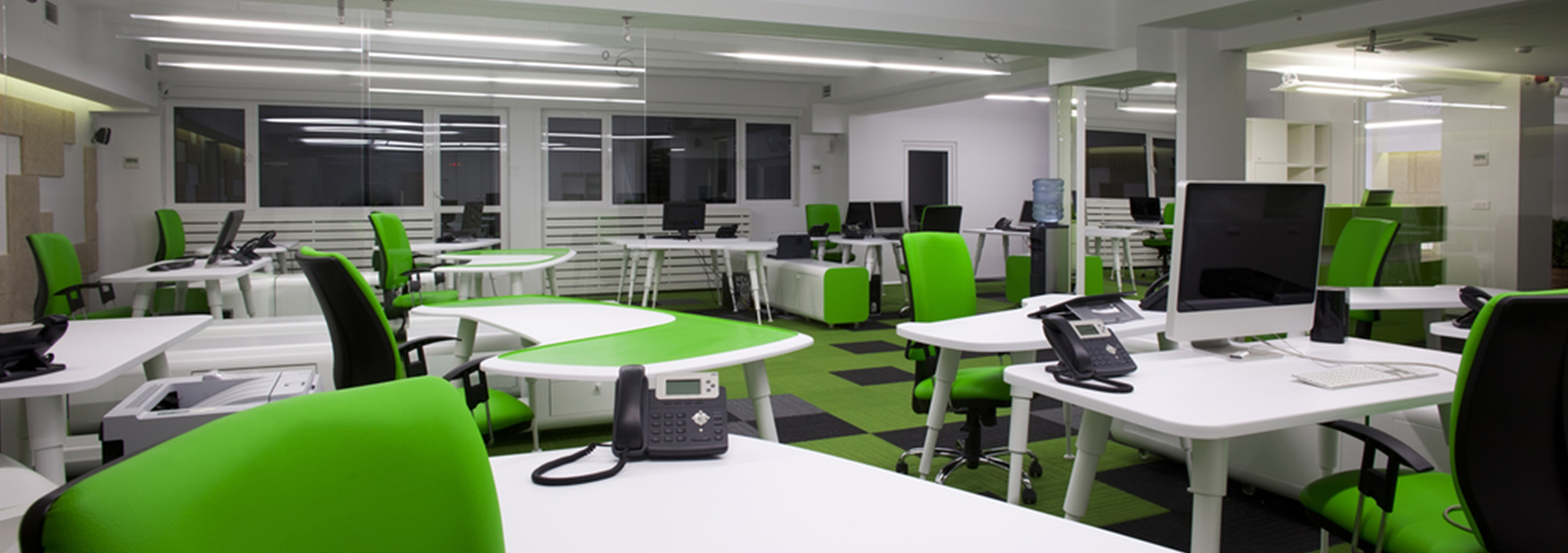
The current furniture design trends are for a very minimalist neat approach; there has been a huge amount of influence from the “Apple effect” with white gloss desks and cupboards being very trendy at the moment; giving a very clean effect. To add a bit of colour and life to the office a few items of classic designer furniture, such as a Jacobsen Egg chair, or a group of Verner Panton chairs can be added making the office look very contemporary. It is worth noting that whilst desks and storage are evolving, the design classics still look modern today, and there is more and more of a cross over from domestic designer furniture to the office.
If you would like advice as what furniture would suit your office design, give us a call on 0845 166 8381.
There are many companies that can recommend and supply office furniture, so what makes us different. Well, we are a fully independent space planning company, which means that we are not tied to any supplier or product range, and therefore we only recommend the products that will suit you best, rather than what would suit us best. This means that you get unbiased advice and we can suggest furniture companies that will supply you with the best office furniture for your needs. Every office is different and not all will need top-end expensive furniture, and we are able to give you details for companies that specialise in simple effective furniture, as well as companies that have very solid, hardwearing furniture that is designed to stand up to many office moves. We can even advise on furniture recycling and disposal if you are considering a total revamp. Additionally we are able to carry out furniture condition surveys, these are accurate colour coded plans that show your existing layout and the state of each office desk, office chair and item of storage. This can be particularly useful for larger companies that have a large amount of furniture and know that some of it is past its best, but other parts are perfectly serviceable. We would test each chair, each drawer etc, and then rate each item of furniture as to whether it should be replaced, or is in good working order.The plans are then marked up with coloured hatching so it is very simple to see exactly what is where and its condition.
If you would like our advice about your office furniture, give us a call to discuss.
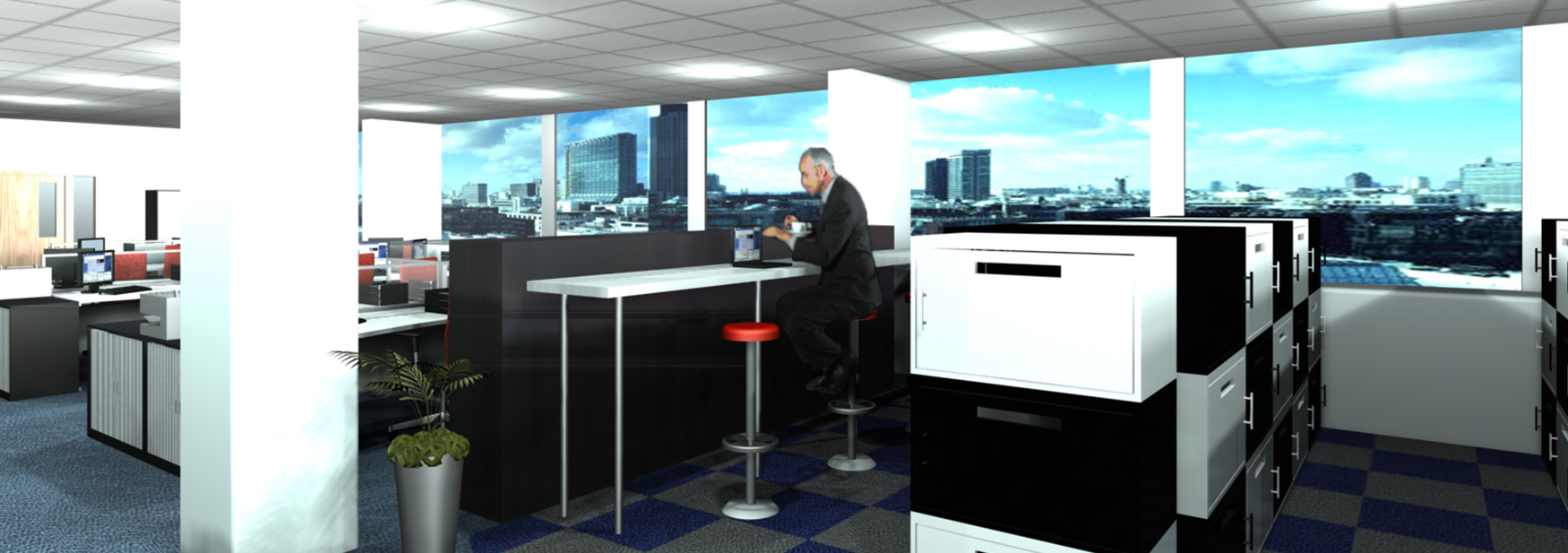
Office chairs are often overlooked when considering the ideal office design, but they are actually a very important tool to the office worker. Every day there are many thousands of people across Britain that are away from work due to bad backs, and often these problems are due to poor office chairs. Many staff remain seated for hours at a time in inadequate office chairs and this leads to poor posture, and eventually back pain. The first way to alleviate this problem is to ensure that staff are aware that they should get up and move around every hour. It is possible to promote this via office space planning by having office storage that is not right next to each member of staff. If you are having to get up and go to a central storage area to collect and replace files, then without realising it, you are exercising your back, and preventing strain. Centralised storage is also sensible to allow you to get the best out of your space planning as it allows you to group staff together, and storage together giving a much more efficient layout.
There are many hundreds of different types of office chair, so how do you know which one is the best for your staff? Basically there is no one chair that will be perfect for everyone has different requirements and body shapes, but as a general rule the more adjustable the chair is, the more likely you are to find a setting that suits the user. As a minimum the office chair needs to be height adjustable, and intensive users would ideally have some level of seat pan tilt and lumbar support. It is actually the responsibility of employers to ensure that all users of PCs have adequate office furniture for their job role (a DSE assessment- Display Screen Equipment), and we are able to send our staff to carry out these risk assessments at your office, and to make recommendations as to the most suitable furniture and office chairs for your staff. Call us to discuss how we can help.
The size and shape of the office desk plays a major part in the final office design. Obviously, the larger the desk, the fewer you can fit in, but also the shape can play a big role is the layout too. The most common office desk type in the UK is still the “L-shaped” desk, also known as a corner (or sometimes crescent) desk. This desk type has a deep corner section, which is designed to house a large CRT monitor. However, the majority of monitors are now flat screens, and so this space is in effect redundant. The large return of the L-shaped desk means that you need to space them further apart in order to allow for adequate access between desks. This is especially important due to the DDA regulations (Disability Discrimination Act), which state that the office should be planned in such a way that it is useable by wheelchair users and the less able bodied. It therefore makes sense when planning an office layout to consider the type of office desk and go for something that allows for adequate surface space, but doesn’t require a huge amount of space between desks. A solution here would be a wave type desk, which has a slightly deeper end at one side, which is usually 200mm deeper than the rest of the desk top (compared with 800mm deeper for most L-shaped desks). In fact due to the ever shrinking size of desktop PCs, many companies are even going for rectangular (straight) desks, or even flexible bench type desking. These can further help to improve your office design by being very space efficient, whilst still useable. There are many other types of office desks available too, such as the double wave, the 120 degree desk, and the call centre pod, so if you would like advice as to what would work best in your office, just give us a call, or drop us an email (see contact page for details).
Office furniture has changed significantly over recent years; whereas a simple desk was sufficient in the pre-IT days of the 1980s, the 1990s saw ever increasing monitor sizes and therefore much bigger desks. As more staff were spending increasing amounts of time at their desks using the IT equipment, ergonomics played a bigger part in office design and the large corner desk became commonplace. However since the flat screen TFT monitor has become the norm, such large desks are less necessary, and with more offices going paper-less the actual workspace is now getting smaller. Most people now order wave type desking (rather than corner type), or even straight desks or benching.The space freed up by smaller desks can then be used to fit in alternative working zones, such as hotdesks and breakout areas. There are also changes to the trends in the furniture finishes, with a sleek minimal look being the current vogue. The shiny white “Ipod” look has become very popular replacing the standard pale wood finishes in many modern offices, and this is often offset with a few designer style chairs to give a contemporary look.
If you would like impartial advice on your office furniture, give us a call. We are fully independent and so not tied to any single supplier or product range and so can recommend the best possible solution for your needs.