|
June 23, 2008
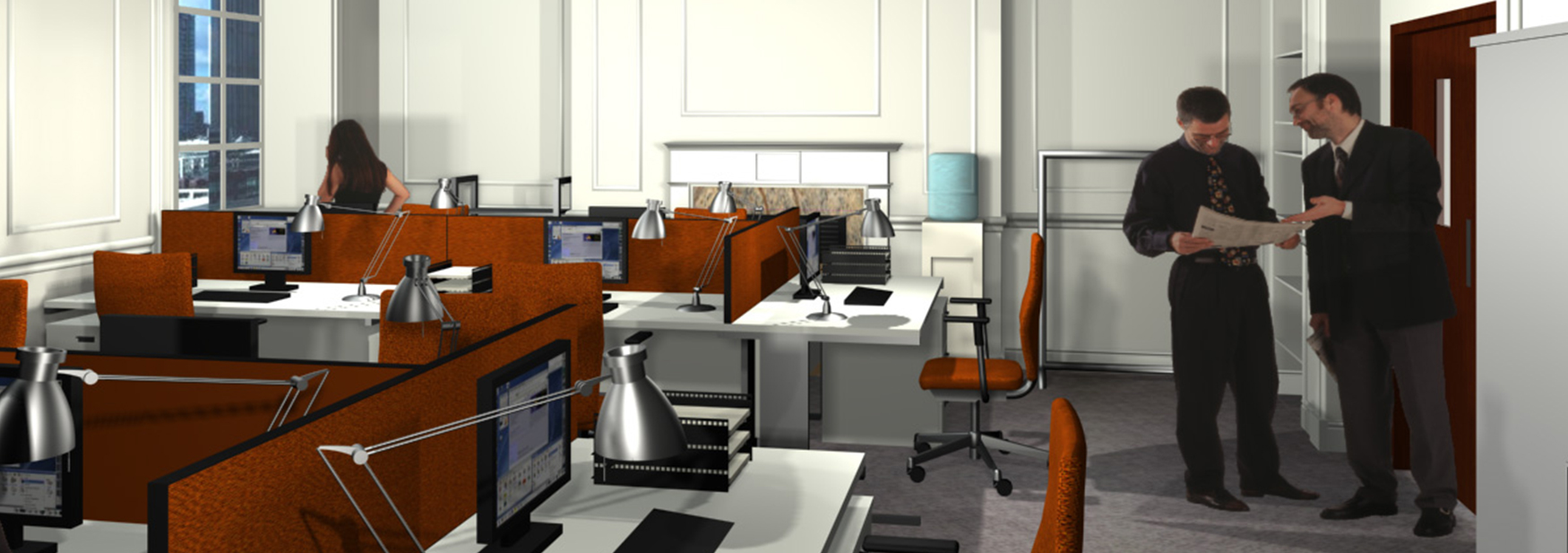
Most new build offices will be designed with a raised floor, but what exactly is this and how can it help to improve your office design? Basically a raised floor is a series of metal floor tiles laid over a raised grid that allow you to position electrical floor boxes anywhere within your office. This can then allow for much greater flexibility of office layout design as it means that desks do not necessarily need to be grouped in spurs coming directly off an external wall. The “spur design” tends to be the usual layout for most 1960s office buildings as these were designed with open plan in mind, but without knowing that the computer would become the standard office tool, and therefore access to electrical and network points would become so important. The raised floor allows the office furniture layout design to dictate the location of the floor boxes , rather than the position of electrical access points dictating the layout, giving the flexibility required to allow for islands of desks within an open plan office.
So, what can you do to have a more flexible layout if you don’t have a raised floor? Well, the first thing is that in order to avoid trailing cables, your most practical layout is likely to involve spurs of desks coming from the walls. However, you can also use any columns in the office in the same way, as it is relatively inexpensive to trunk power and data supplies up through a suspended ceiling and then down a column. Another way in which this can be implemented is via power poles; these work in the same way, having their supply via a suspended ceiling, but they can be moved, should the layout need to change in the future.
As more offices are going wireless and battery technology is improving we may soon be able to work completely wirelessly, and simply leave our laptops to charge overnight in a docking rack. This will give us a truly flexible office space and will no doubt have further impacts on office design.
June 13, 2008
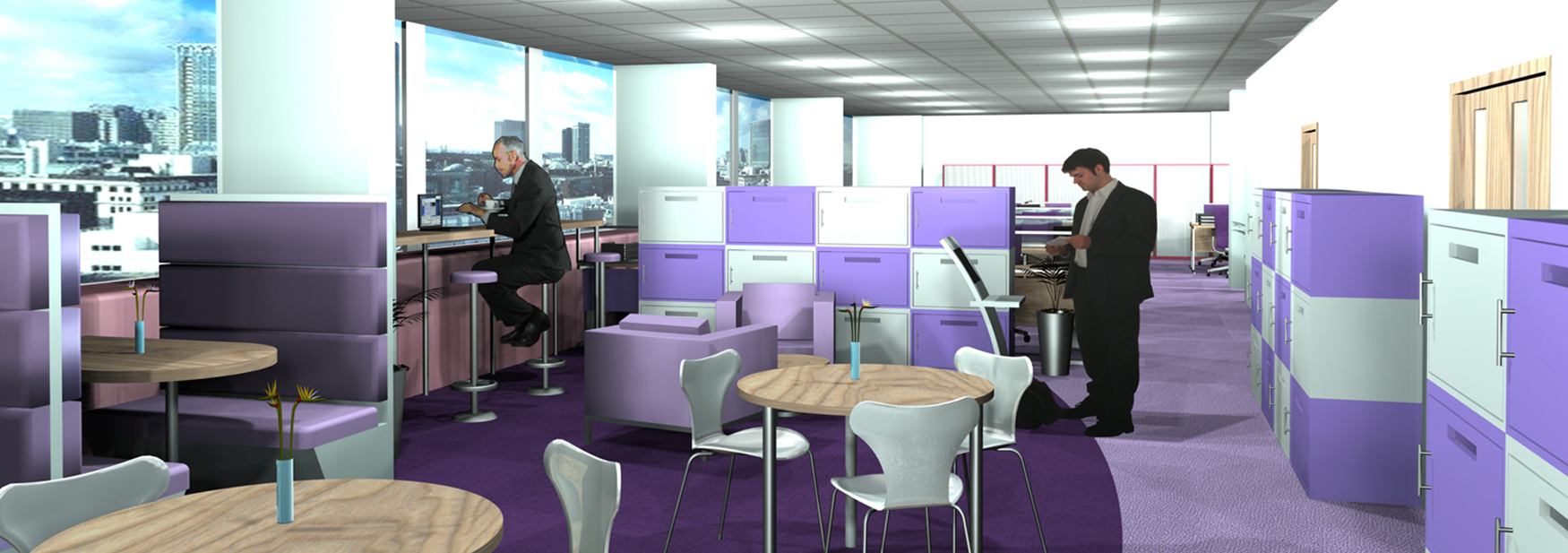
We are often asked how can we help to make offices a little less cold and sterile, and a great way to do this is to maximise your natural daylight resources. The colour, feeling and effects of natural daylight just can’t be replicated by artificial light, and yet so many offices have poor layouts that block daylight within the office. A key principal here is to ensure that windows are not blocked by storage cabinets; the simplest way to do this is by putting all storage cabinets against partition walls. Most offices though have more storage cabinets than wall space, so the best way to ensure that natural daylight is maximised is to only ever have cabinets lined up perpendicular (at 90 degrees) to any windows. This may seem obvious, but so many offices have a row of tall cabinets running through the centre of the office space, and so these are actually parallel to the windows. What this then means is that one half of the office gets good natural daylight in the morning, but very poor in the afternoon and the other side vice versa. Through keeping the cabinets at 90 degrees some light is obscured, but you avoid the dark and light extremes. Of course investing in better storage solutions would help further, particularly a system such as a rolling stack (as discussed in earlier blog posts), as this would allow you to keep your storage in one area and so keep the open areas open.
As well as re-organising your storage, you should also look at the positioning of desks. A common mistake is to put a single manager’s desk (which is often unoccupied) next to the windows, with the bulk of the staff deeper in to the office floor plate away from the natural light. By ensuring that the natural light resource is maximised to as many workstations as possible, the overall feeling of the space for the staff will be improved. There are occasions, such as with a very large floor plate, when this can’t be done, and so here you may need to look as specialised lighting solutions, such as daylight simulation bulbs for individual desk lamps, and using as many transparent or translucent materials as possible around the office, such as frosted glass screens on desks rather than heavy fabric ones.
If you would like us to redesign your office to maximise your natural daylight resources, give us a call.
June 5, 2008
The one thing that we see time and time again when surveying offices is that most companies claim to be lacking in storage, yet the actual cabinets are often half empty. Effective office storage systems are absolutely critical to an effective office design layout, and the process needs to begin with an assessment of what actually needs to be stored on site. These days there are many office storage companies that offer archiving services that can allow you to store paperwork away from your office, yet be able to retrieve it quickly for a small fee. This can allow you to remove cumbersome storage cabinets from your office space and then open up the space improving both natural light and air circulation. There will always be some things that need to be stored on site, but with effective scanning systems every piece of paperwork can be catalogued and stored on your company servers. Not only will this reduce the need for office storage, but it also usually aids searching and retrieval as the scanned documents can be tagged with a wealth of information. There is also the added benefit that more than one person at a time can have a piece of information open, aiding information sharing, which is much more difficult when the information is held within a single paper folder.
It’s not just filing that takes up office storage though, as we often see large stationery store rooms. However these too are no longer as necessary as most stationery suppliers offer a next day delivery service, meaning that it is not so critical to maintain a large store on site. Even printed material can often be ordered via the internet on a much quicker turnaround than it used to be, meaning less space is required for its storage on site.
Call us to discuss your storage problems and see how we can help improve your overall design layout.
May 15, 2008
As well as working for large companies, we have also carried out many projects for smaller companies and charities that need their space to be improved, but often don’t have much of a budget. However there is often still a lot that can be done, and we specialise in showing companies on limited budgets how to re-use their existing furniture in a more cost effective way, often allowing for additional desking, or breakout areas that can really benefit the staff. Through rearranging your desking and storage it is often possible to free up additional space, but also it is often possible to do simple things such as removing or changing desk high pedestals for under desk ones giving each desk a smaller footprint. This then gives you options for alternative layouts and through clever space planning you can free up all of that wasted space. We can also show the effects of removing partitions and give you maximum density space plans so that you know what the capacity of your office space is. Through providing a series of options starting with minimum disruption and cost through to maximum efficiency (although at a higher outlay) we can give you all the choices you need to make the most of your workplace.
May 9, 2008
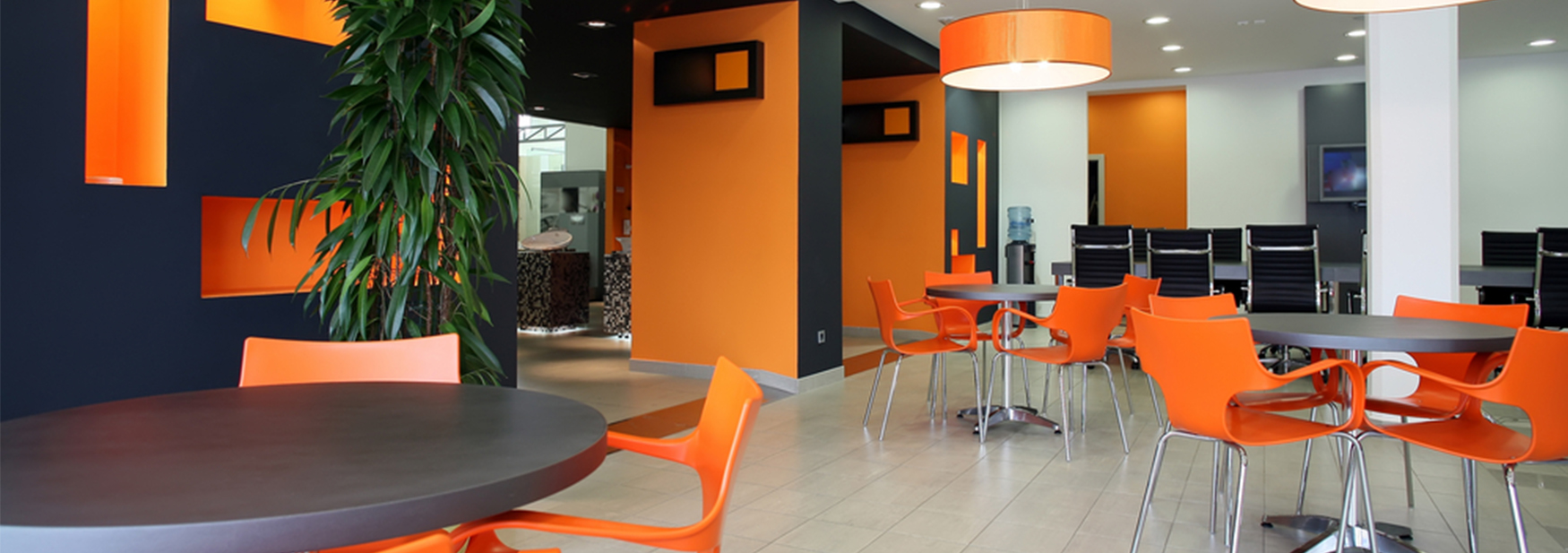
There are a number of relatively small benefits that staff perceive as being a real bonus in their jobs. Through using these little extras staff are happier, often more productive and more likely to satisfied in their job roles. Some examples of this are free tea and coffee facilities for staff; this discourages staff from needing to store foodstuffs in their personal storage pedestals, is relatively inexpensive and can actually keep staff on site (rather than going off site for a coffee). Combining this with an attractive breakout area, particularly if it is a modern e-café style coffee area, gives a real bonus for your staff. The area can be used for informal meetings, it encourages communication and “chance encounters”, which can also increase information sharing and gives staff somewhere to go for lunch that means that they can still be near to their desks. Many offices are now going one stage further and including free fruit in these areas, another relatively inexpensive benefit that can also help to encourage healthier staff.
A bright vibrant breakout area can totally lift an office space, so if you would like to discuss how we can transform your office and staff perception of it, give us a call.
April 29, 2008
As part of a natural human tendency, employees invariably relate and react to non-living objects at the office place in symbolic terms and connotations. Take a typical office chair as an example. It has a very important symbolic significance. It conveys the office hierarchy; it acts as a motivator, a status symbol, and a sign of how its occupant is valued.
Similarly, various aspects and elements of the office environment and design tend to influence the employees in different ways. Even colours can influence morale, attitude and outlook towards work. Imbalanced colours in the office can have a negative psychological effect on employees.
Desk and conference table shapes and styles also play a key role in our perceptions. There are three psychologies of a typical office table - round tables, square or rectangle tables and low or no tables.
• Square or rectangle desks and tables: Where the people sit on opposite sides, the ambience seems formal and confrontational.
• Round tables are more practical and comfortable, offering a sense of collaboration.
• The third psychology of office design is very informal. Sofa, club chairs and a low magazine table, or no table at all, provides a warm and relaxed atmosphere.
You may have thought that psychology plays little or no part in office design, but companies who specialise in this area understand the impact of office space planning.
April 26, 2008
It makes sense that employees who are happy with their working environment will work far more effectively and happily than those who are uncomfortable; thus it makes more sense to consider certain aspects of your employee’s workspace quite carefully.
Noise
If you feel that they have an issue with the amount of noise within their workplace then you need to get a proper measurement of noise levels.
Noise can be the cause of permanent hearing damage and also lead to increased levels of stress. The solutions are quite simple e.g. providing your employees with hearing protection, rotating and shifting the staff that works closely to noisy machinery and clearly marking and indicating any high noise areas to warn people of the risk.
Ventilation
Fresh air is one of the most critical (more…)
April 24, 2008
When going for unconventional, off-beat office space planning, one can be a bit more adventurous to find a structure that exudes a natural feel and one that is conducive to wildlife or nature lovers. You could, for example, either grow your own greenery or buy readymade.
lternative office space designs incorporate garden offices with a ‘living roof’ that also acts as a good insulator in winter as well as summer. Unlike a home office, the interior of a garden office does not need to blend with the rest of your home décor. Instead, it can be a genuine expression of what you require and demand from a pure working environment, customised just for you. In other words, it can be conservative, dramatic, quirky, artistic, minimalist, or any other type that matches your tastes and takes your fancy. A garden office lets you rethink your own working style.
lso, it may be that you cannot produce your best work while chained to a desk, and would rather prefer to work curled up on an armchair or sofa. For such people, investing in a Tablet PC makes sense. The screen rotates 180 degrees. It lays flat over the keyboard, enabling you to comfortably ‘write’ on the screen.
or those who need a different office design than the ‘usual’, Space Planning UK can help and can even reuse your existing office furniture where applicable.
April 23, 2008
Office space planners and designers often note that although most employees relish the thought of working and being part of larger groups, they also like to be isolated for certain activities which must be performed at an individual level. For certain crucial tasks that demand concentration, the employees need privacy to ensure optimum output. The design challenge lies in creating small spaces, which co-exist with bigger surroundings.
ccording to architects, small spaces will dominate the modern office environment in years to come. According to them, big space users will be reduced by mobile technology and also workers seeking flexible working hours. The trend of telecommuting will accentuate the wastefulness of large, under-utilised buildings, leading to a metamorphosis in the vision of the workplace. Offices will become more meeting centres with compact, individual ‘hotdesk’ areas.
his particular school of thought believes that offices require more intimate and collaborative spaces. Companies have realised that great things happen when you see and meet different people. However, offering no meeting places except workstations is surely an invitation to constant and unnecessary interruption, so you also need special, informal meeting zones where your staff is located.
April 18, 2008
There has to be a proper office design or plan to ensure that a balance is struck between the space allotted to individual workstations and that given to the group spaces. The balance is bound to be different for each firm, depending on the nature of its business and how employees go about their work. Also, whenever the space for a workstation is cut down, it makes sense to provide for needs in other ways.
If there is no room for a guest chair in or near any of the individual workstations, but meeting and interacting with others is part of the day-to-day job, space planning should provide a variety of other areas nearby to meet other needs such as a break-out area, meeting table or one of many other possibilities.
If there is not much room for filing space within the workstation, it is usually a good idea to keep archive files nearby. There are many such minor, albeit important things to be kept in mind, when looking to save on office workspace and if you are not careful important points can be overlooked.
This is where expert advice comes into play. Space planning professionals, such as Space Planning UK, using their practical insight and experience, can help to strike the right balance as necessary for employees to be able to work effectively in the available office space.
Older Posts » |
|
|
|
Copyright 2007 -Space
Planning UK Ltd- Company number 5269824 - VAT number 854 8974 63
Registered Office: 3rd Floor Montpeilier House, 99 Montpelier Road,
Brighton, BN1 3BE
|